Coverage depends on which of three mechanisms moved your house, and the timing identifies it. Washout arrives on the day of a storm and stops. Clay movement reverses between seasons. Consolidation is slow, continuous and one-way. Only one of those looks like a sudden event.
What decides it, what to document, and what we can and cannot do for a claim.
Bay County is two grounds, and three mechanisms
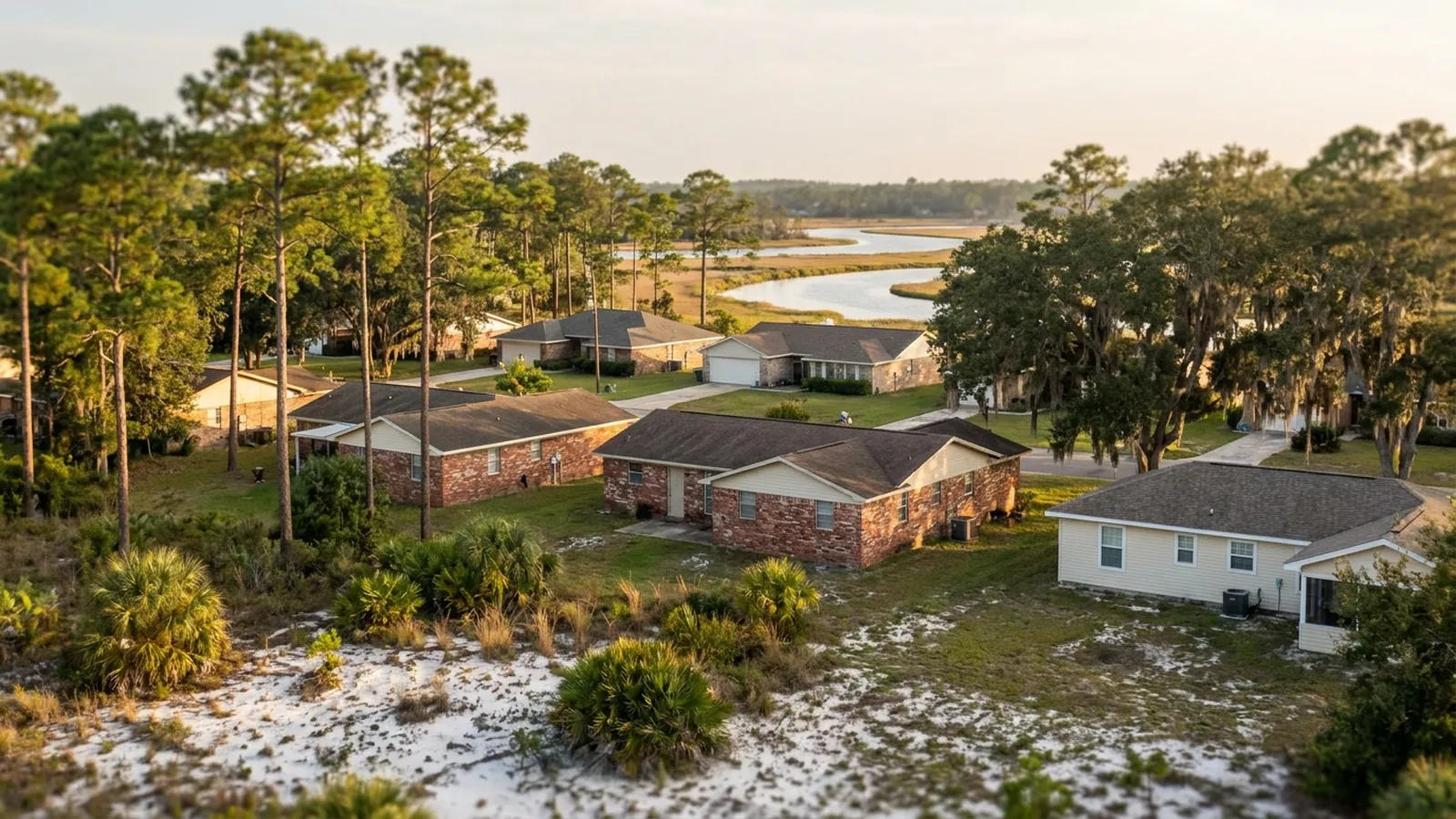
The ridges here are deep quartz sand — the Foxworth series runs 93 to 96 percent sand to 80 inches. The flats, bayou margins and old marsh are something else entirely. So a house can be sitting on material that washes, material that compresses, or material that swells, and each produces a different damage signature over time.
That temporal signature is the diagnostic, and it happens to be exactly what an adjuster is assessing. Washout damage appears after a specific storm and then stops. Expansive clay damage reverses between wet and dry seasons, which is why it can look like it is healing. Consolidation settlement is slow, continuous and one-way — it runs for years and never comes back.
Why that matters before you file
A claim describing a slow, continuous process is describing something most policies exclude. A claim anchored to a dated storm event is a different document. Establishing which one you actually have is worth doing before the paperwork, not after — and washout and sinkhole activity are themselves distinct, with different treatment again.
How do I work out when it started?
Most people cannot answer that straight away, and the useful evidence is rarely the crack. It is the things noticed and dismissed: a door that started sticking one season, a hairline that appeared after a particular storm, a floor that felt different, a gap above a window that opens in August. Write down what you saw and roughly when, before anyone repairs anything.
What should I document?
- Dates, as precisely as you can establish them — a sudden claim lives on them
- Photographs before repair, with something for scale
- An elevation survey, which converts an argument about cracks into numbers
- A written scope that names the cause, not just the damage
We are not an insurer or a loss adjuster and we do not advise on coverage. What we provide is the technical half: measured elevations, photographs, and a scope stating what we believe moved and why. Read your own policy's exclusions — earth movement is among the oldest and broadest of them, and wording differs between insurers.
Claims, answered plainly
Is foundation movement covered by my policy?
Earth movement is one of the oldest and broadest exclusions in homeowner policies, so gradual settlement usually is not. Damage anchored to a dated storm event is assessed differently. The timing is what separates them.
How do I know which mechanism I have?
By the shape of it over time. Washout appears after a storm and stops; clay movement reverses between seasons; consolidation runs slowly and never reverses. The survey and your own recollection of when things changed establish it.
Is a sinkhole the same as washout?
A sinkhole isn't the same as washout, and insurers treat them differently. They can look alike from inside the house, which is why the distinction is worth establishing before a claim rather than during one.
What do you provide for a claim?
Measured elevations, photographs and a written scope naming what we believe moved and why. We are not an adjuster and do not advise on coverage.
When does a policy actually pay for foundation work?
This market has lived the difference between wind and flood at full scale: Hurricane Michael was a wind event, the surge was a flood event, and every policy on the coast treats those two as different worlds.
| Option | What it does | The local wrinkle |
|---|---|---|
| Slow settlement over years | Almost never — excluded as earth movement | Consolidation on filled low ground reads as gradual — the excluded default |
| A sudden plumbing leak | Often — the leak itself is the covered peril | A clean path when a line fails and washes the sand from under one footing |
| Storm or flood damage | Flood needs its own policy; wind is argued case by case | The defining local question: wind policy or flood policy, and surge is flood |
| After any covered event | Document the same week — timing decides these | Post-storm, the day-of photographs decide washout claims — sand moves once and stops |
On placed fill — and much of the developed low ground here is fill — expect the insurer to ask when the fill was compacted and to what standard. Florida code has an answer; older fill often does not.
Book a free Panama City elevation survey
Tell us roughly when the house was built and whether the lot was raised or filled before it went up — even “I think they trucked dirt in” is worth knowing. On this ground the age of the house and the history of the pad narrow the answer faster than any description of a crack. Same working day reply.